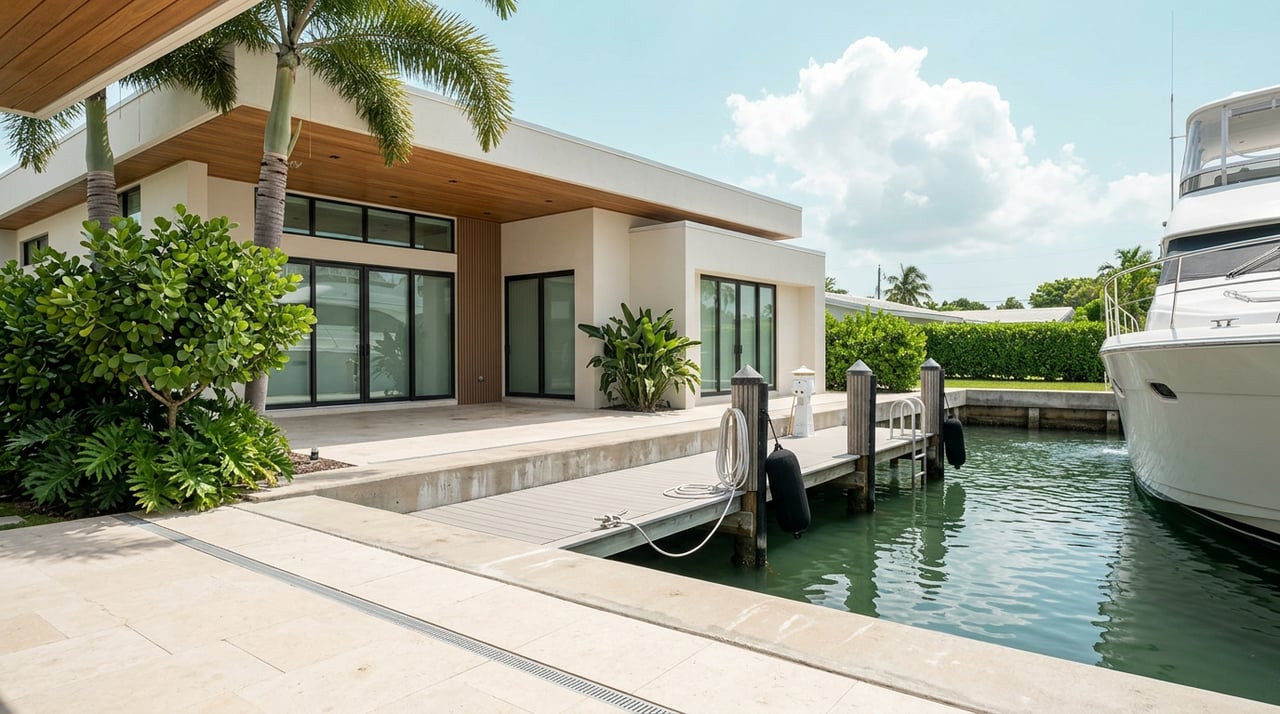
Fort Lauderdale Waterfront Living For Yacht Owners
April 2, 2026
April 2, 2026
If you own a yacht, not all waterfront living works the same way. In Fort Lauderdale, the right home is about much more than a pretty canal view. You need the dock, the route, the bridge clearances, and the inlet access to work together. This guide will help you understand what matters most so you can make a smarter waterfront decision in Fort Lauderdale. Let’s dive in.
Fort Lauderdale has long been built around life on the water. According to the City of Fort Lauderdale marine facilities page, the city offers 165 miles of navigable waterways, public docking, and marine facilities along the New River, Riverwalk Linear Park, and areas near the Intracoastal Waterway. The city also hosts the world’s largest in-water boat show, which reflects how deeply boating is woven into the local market.
This matters because buying waterfront property here is not just a lifestyle move. It is also a boating access decision. As NOAA’s Coast Pilot notes, yachting and small-craft facilities are centered in Fort Lauderdale just north of Port Everglades, making this one of South Florida’s most active boating hubs.
If you are shopping for a home with dockage, start with your vessel rather than the house itself. In Fort Lauderdale, the practical value of a waterfront property often depends on how quickly and safely you can get from your dock to open water.
That is especially important because Broward County’s Safe Boating Guide describes Port Everglades as a wide, deep inlet with heavy commercial traffic and steep wave action on an ebb current. In other words, your route planning matters. A home that looks ideal on paper may be less convenient if the path to the inlet includes tight timing, fixed bridges, or high traffic patterns.
For many yacht owners, bridge clearance is the first major filter. Before you compare neighborhoods, compare your yacht’s air draft with the bridges on your expected route.
According to Broward County’s guide, key local bridge clearances include:
These numbers can quickly narrow your search. If your yacht’s air draft works with the route, canal-front homes and downtown dockage may remain realistic choices. If not, you may want to focus on areas with no fixed bridge restrictions or homes closer to Port Everglades.
That same logic shows up in local marina marketing. For example, Pier Sixty-Six Marina specifically highlights zero bridge restrictions and direct convenience for larger vessels, which tells you how important unrestricted access is in this market.
For many owners, the real question is not just whether a home has a dock. It is whether the dock supports the way you actually use your yacht.
If you leave frequently, entertain aboard, or prefer fast runs to the Atlantic, near-inlet access can be a major advantage. The fewer bridge openings, route delays, and traffic variables you deal with, the easier your boating routine becomes.
NOAA also notes that vessel traffic near Port Everglades can be significant, so timing and radio discipline matter when navigating that area. That means a well-located property can save not only time, but also reduce some of the day-to-day friction of ownership.
For buyers considering options farther north in Broward County, NOAA’s Coast Pilot says Hillsboro Inlet is about 12 miles north of Port Everglades. It also notes a controlling depth of 15 feet seaward of the jetties and 8 feet from the jetties to the bridge, with guidance to consult charts and local knowledge before transiting. That makes vessel size, draft, and route preference even more important when comparing locations.
Even if you plan to keep your yacht at home, marina access should still be part of your buying strategy. A well-matched marina can provide backup dockage during maintenance, travel, weather events, or temporary interruptions at your property.
The City of Fort Lauderdale operates public options including Cooley’s Landing and New River/Downtown Docking at 450 SW 7th Ave. The city also provides four complimentary pump-out locations and notes that its marine facilities are designated Clean Marinas.
Private marinas serve different yacht profiles, which makes them useful reference points as you evaluate your home search:
When you evaluate a waterfront property for yacht ownership, it helps to look at the whole picture rather than one headline feature. A long dock or wide canal is only part of the equation.
Focus on these practical questions:
In Fort Lauderdale, waterfront living tends to be a fit problem, not just a location search. The better the fit between your yacht and the property, the better the ownership experience.
The City of Fort Lauderdale neighborhood association list includes waterfront and boating-oriented areas such as Harbor Beach, Rio Vista, Coral Ridge, Coral Ridge Country Club Estates, Coral Ridge Isles, Lauderdale Harbors, Lauderdale Isles, Las Olas Isles, Seven Isles, and Bermuda Riviera.
These names can help you start your search, but they should not be the final decision point. Two homes in the same neighborhood may offer very different boating convenience depending on canal width, route layout, bridge profile, and distance to the inlet.
That is why the best next step is to study the exact dock-to-inlet route for any property you consider. For yacht owners, route compatibility often matters more than the neighborhood label.
Waterfront ownership in Fort Lauderdale also requires careful property-level due diligence. Broward County’s current flood maps became effective July 31, 2024, and the county notes that VE zones are coastal areas with added storm-wave hazards and mandatory flood insurance requirements.
The City of Fort Lauderdale’s flood information page explains that the city is low, flat, and surrounded by water, and that many residents live in or near Special Flood Hazard Areas. It also notes that flood insurance is generally required for most federally secured mortgages on properties in these areas.
The city further states that it participates in the National Flood Insurance Program’s Community Rating System, and residents currently receive a 20% flood insurance discount through that program. That is helpful, but it does not replace careful review of flood zone status, elevation, insurance requirements, and how these factors affect ownership costs.
On a waterfront property, the seawall is not a cosmetic detail. It can affect maintenance planning, inspections, and future costs.
Recent City of Fort Lauderdale seawall replacement projects in Rio Vista and Hendricks Isle highlight how relevant seawall condition is in this market. When you are evaluating a property, ask about seawall ownership, age, condition, elevation, and maintenance history.
This is one of the most important parts of due diligence for yacht owners. A strong docking setup depends on more than canal frontage alone.
In Fort Lauderdale, storm planning should be built into your decision from day one. The city notes that hurricane season runs from June 1 through November 30, and NOAA reports that storm tides in Fort Lauderdale have exceeded 12 feet in the past.
NOAA also states that because sheltered berths are limited, offshore evacuation is the best course for seaworthy deep-draft vessels when a hurricane threatens the port. That means your ownership plan should include more than insurance and dock lines. You should also think through where the vessel goes, how quickly you can move it, and whether your home dock or backup marina supports that plan.
If you are buying waterfront property for a yacht, the goal is not simply to find a home on the water. The goal is to find a property that supports the way you boat.
In Fort Lauderdale, that means checking boat dimensions, bridge clearances, inlet access, marina backup, flood exposure, seawall condition, and storm planning together. When all of those pieces align, waterfront ownership becomes far more practical and enjoyable.
If you want a private, informed approach to evaluating Fort Lauderdale waterfront options, connect with Rajkumar Ramkerath. You will get boutique guidance shaped around your vessel, your goals, and the realities of this highly specialized market.
Stay up to date on the latest real estate trends.
We pride ourselves in providing personalized solutions that bring our clients closer to their dream properties and enhance their long-term wealth. Contact us today to discuss all your real estate needs!
RAJKUMAR RAMKERATH
2000 NW 150TH AVE PEMBROKE PINES FL 33028